Milan: from the pharmacy to industrial production

"My plan for the future is clear: I intend to continue improving the technical equipment used in my industry, while placing the utmost importance on the training and professional expertise of my staff.

Only with well-equipped facilities and highly qualified personnel can the Italian pharmaceutical industry ensure increasingly effective care for all"


Franco Dompé
Onorato Dompé founds the Dompé-Adami laboratory in Milan

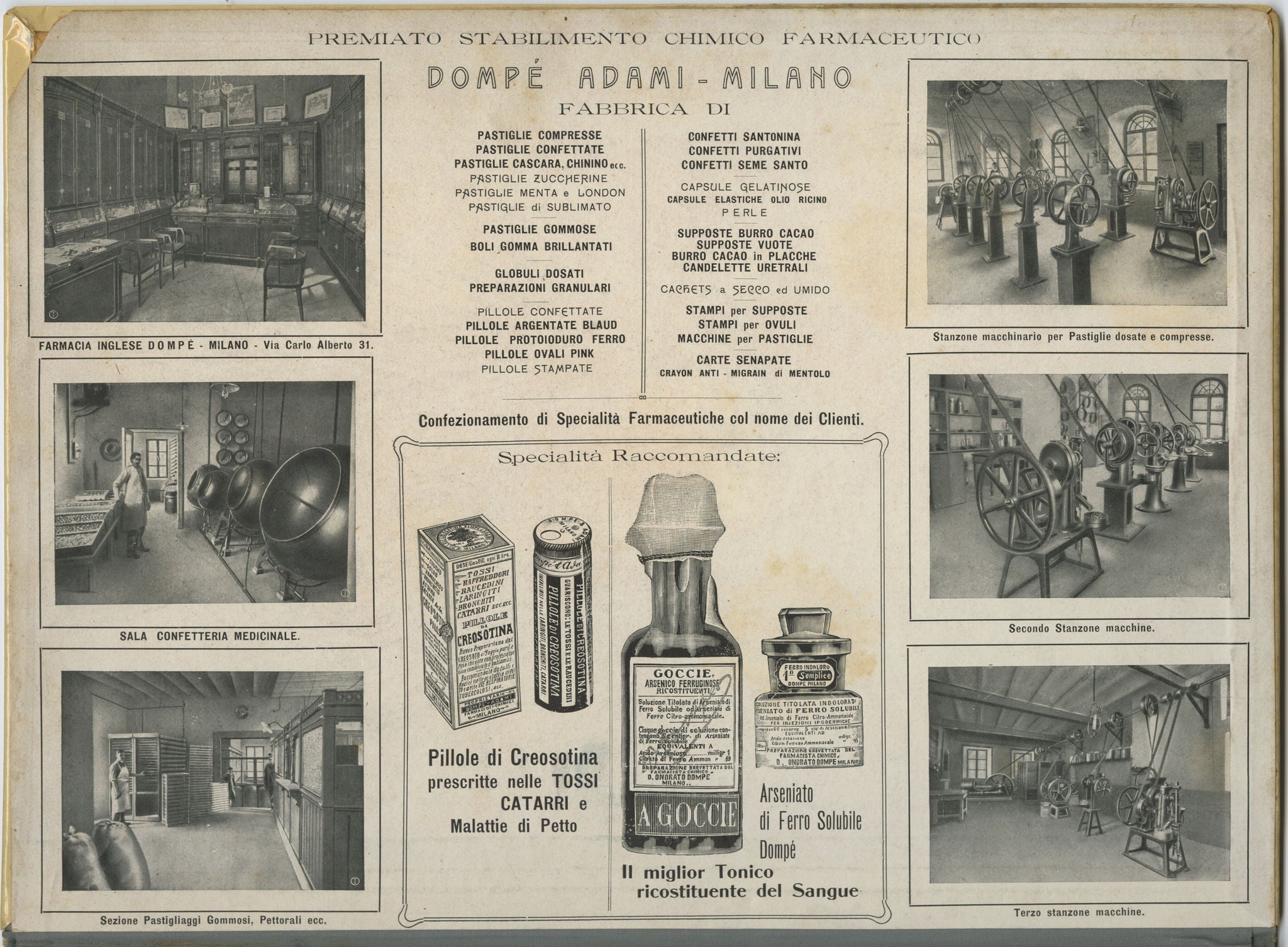
“Premiato Stabilimento Chimico Farmaceutico Dompé Adami - Milano”, front of a document folder (1910s)

Milan welcomed and supported the early stages of the Dompé family’s entrepreneurial journey. Everything began in 1890, when the Piedmontese chemist Onorato Dompé – son of Gian Antonio, a man with a passion for chemical and pharmaceutical science – chose the city as the base of his company. Together with a partner, he founded the Dompé-Adami laboratory, where he introduced modern machinery for the production of medicines and adopted the principles of the British pharmacopoeia.

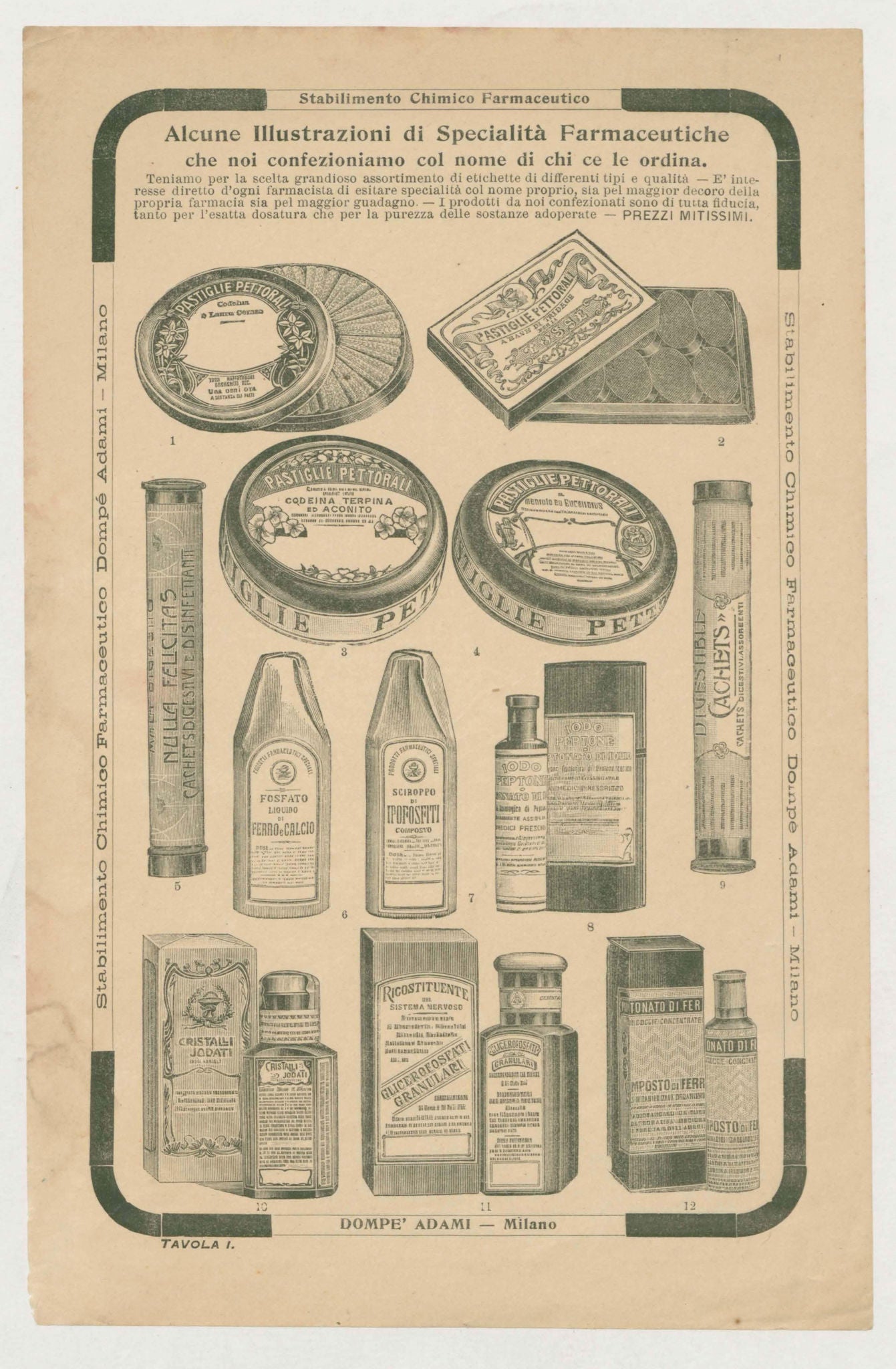
Stabilimento chimico farmaceutico Dompé-Adami, "Selected iluustrations of pharmaceuticals specialties" (1890s)

A series of machines, powered by a centralised system of transmission belts and overhead pulleys, typical of late nineteenth-century industrial archeology, were used for the large-scale production of lozenges and tablets.

The Dompé pharmacy chain

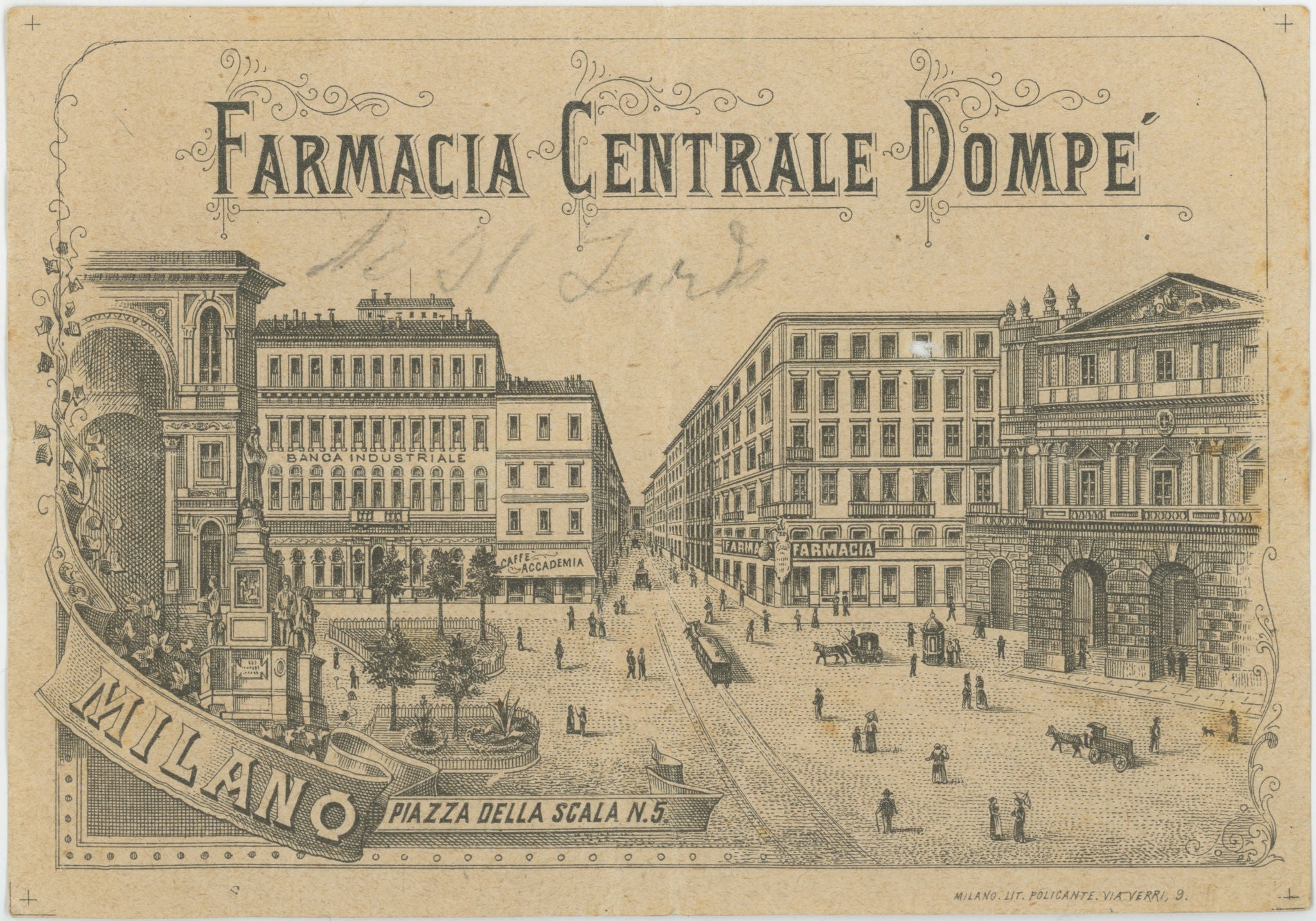
The success of the venture led him to expand into distribution alongside production: in 1895, just a stone’s throw from La Scala Theatre, he opened the Farmacia Centrale Dompé. Located right in the heart of the city, this business paved the way for the creation of the Farmacie Inglesi Dompé, a network of four pharmacies that Onorato would open from 1902 onwards across Milan, Ponte Chiasso and Palermo.

The laboratory in via San Martino

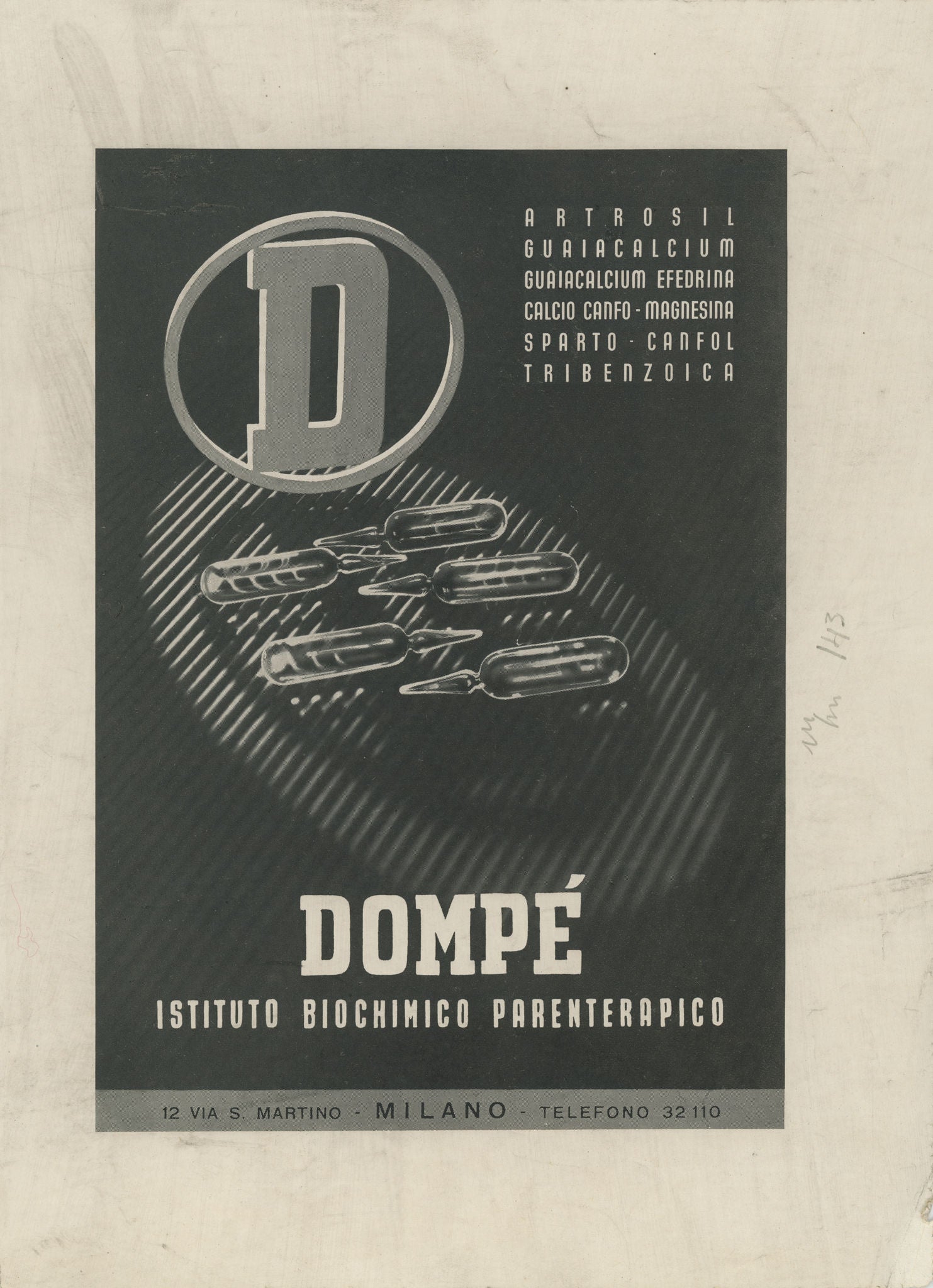
Sketch for the advertising poster “Istituto Biochimico Parenterapico Dompé” (1940s)

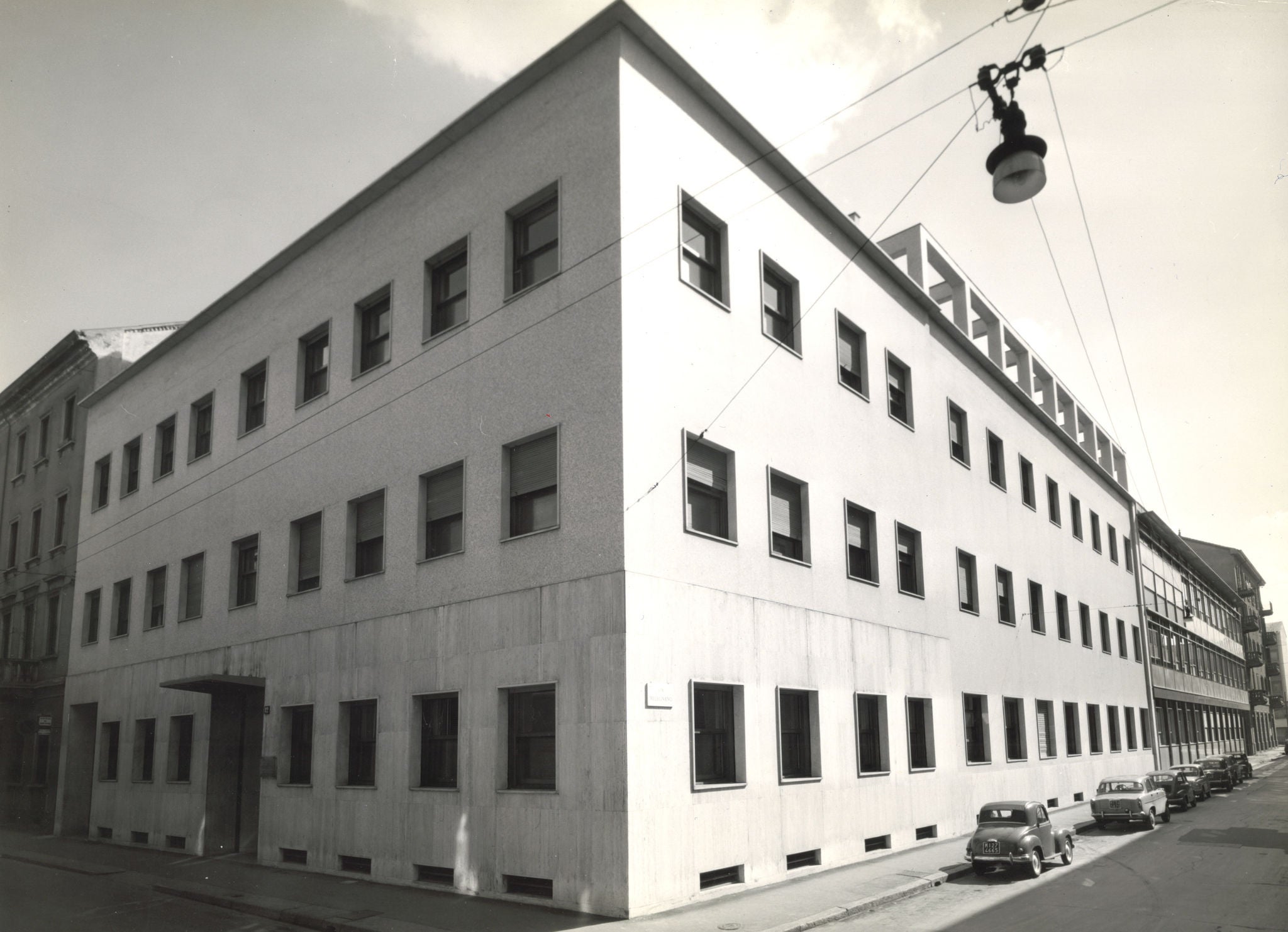
In 1924, Onorato – who in the meantime had decided to focus exclusively on production – moved the laboratory to larger premises, at 12 Via San Martino. In a Milan where science and industry were already an everyday commitment, the new spaces became a center for experimenting with new formulations and designing precision machinery. In 1942, Dompé-Adami was sold, giving Onorato the opportunity to establish a new independent laboratory, once again in Via San Martino.

The bombings and Dompé farmaceutici

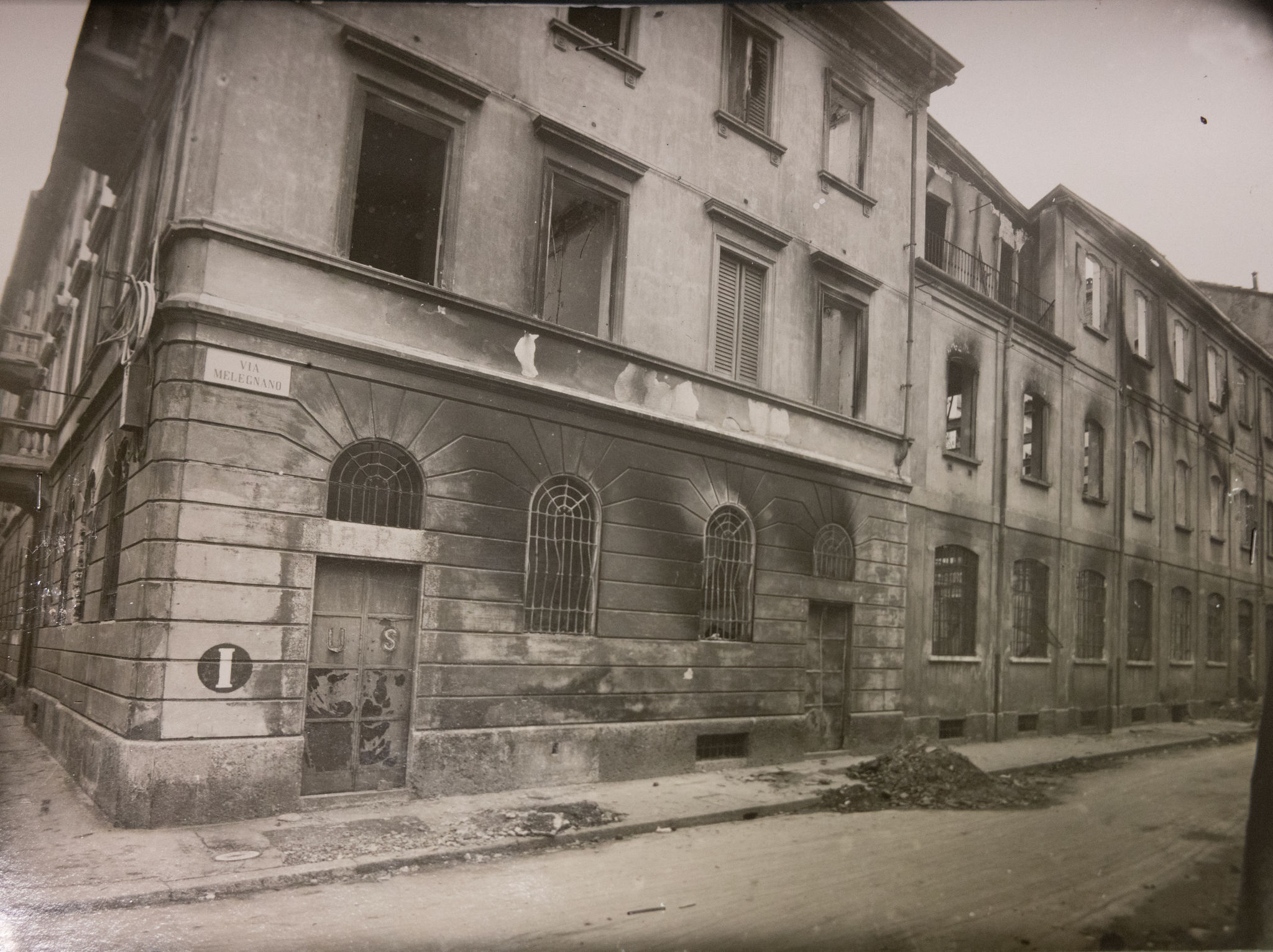
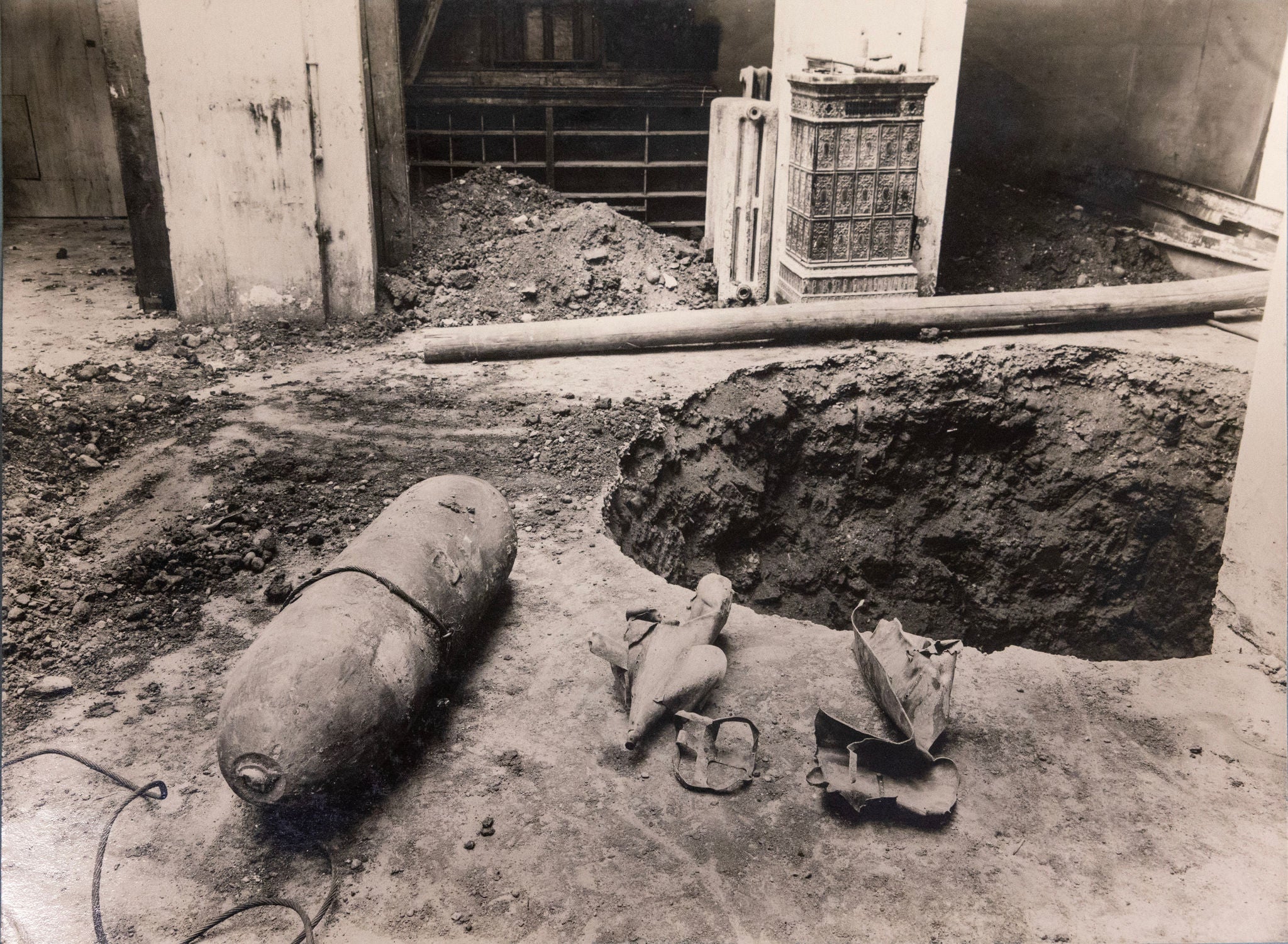
World War II brought things to an abrupt halt. In August 1943, bombings by the British Royal Air Force severely damaged the plant and, in a subsequent raid, an unexploded bomb crashed through the skylight. Having lost their home and part of the laboratory, Onorato and his wife Luigia were evacuated to the area near Como, while their son Franco remained in Milan. In 1946, it was he who led the business relaunch: at his own expense, he undertook the reconstruction of the building in Via San Martino and transferred there the headquarters of his production laboratory, Dompé farmaceutici.

The new plant and vial production

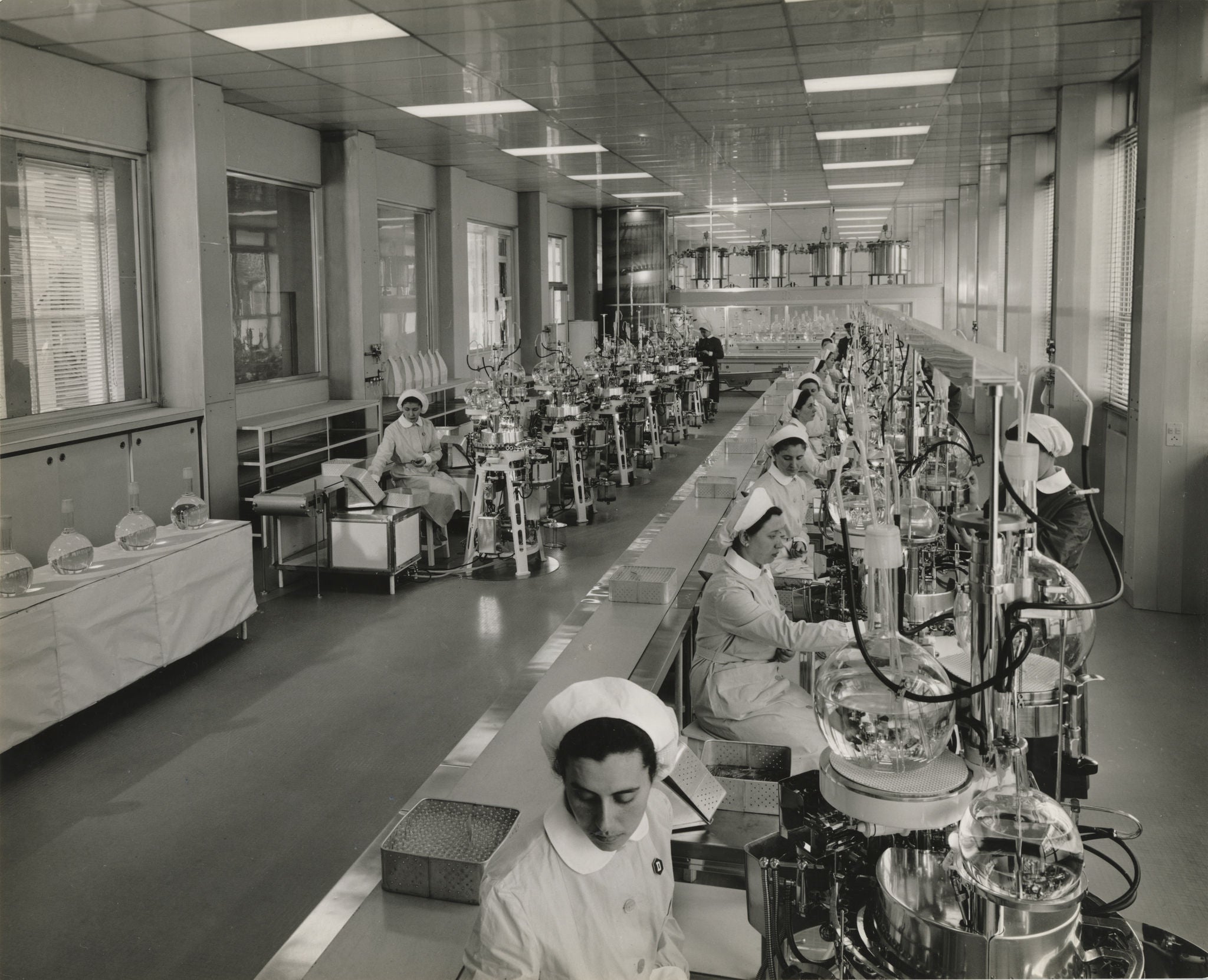
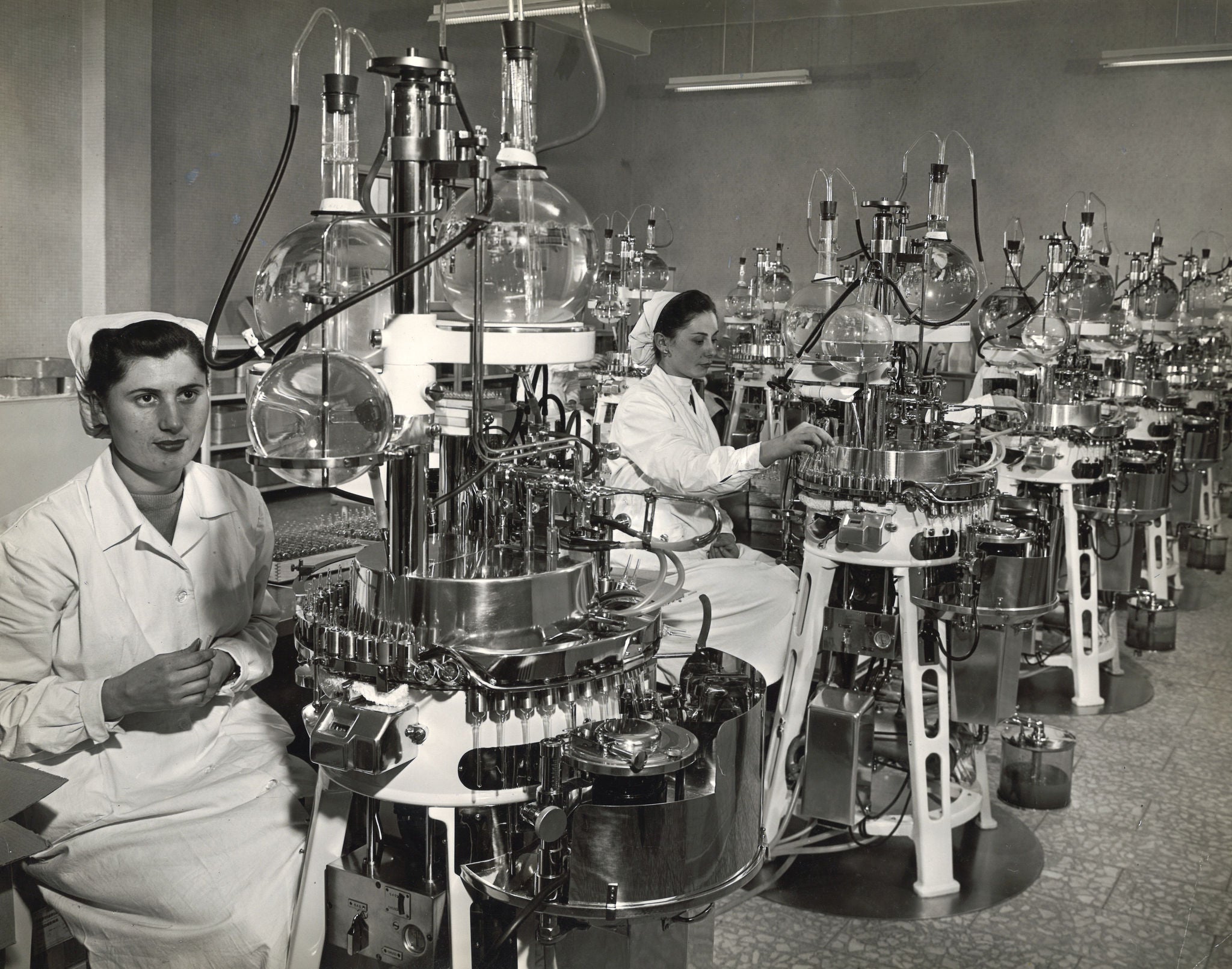
The new plant was inaugurated in January 1951 in the presence of the Cardinal and Archbishop of Milan, Ildefonso Schuster, in Milan at Via San Martino 12. Covering 15,000 square metres, the white complex in rationalist style, designed by architect Clerici and engineer Perolini, embodied the optimism of a reborn Italy looking towards the future.

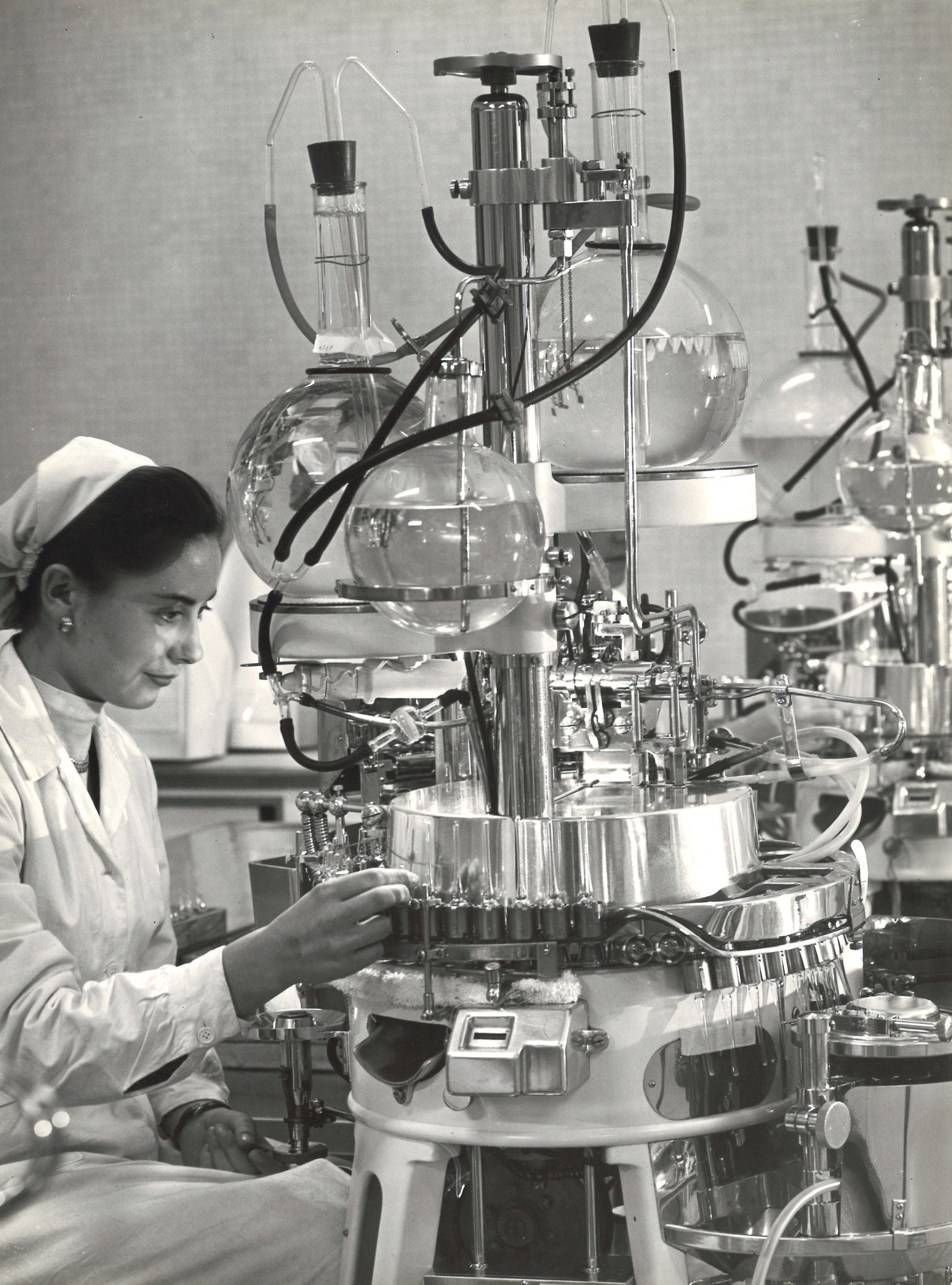
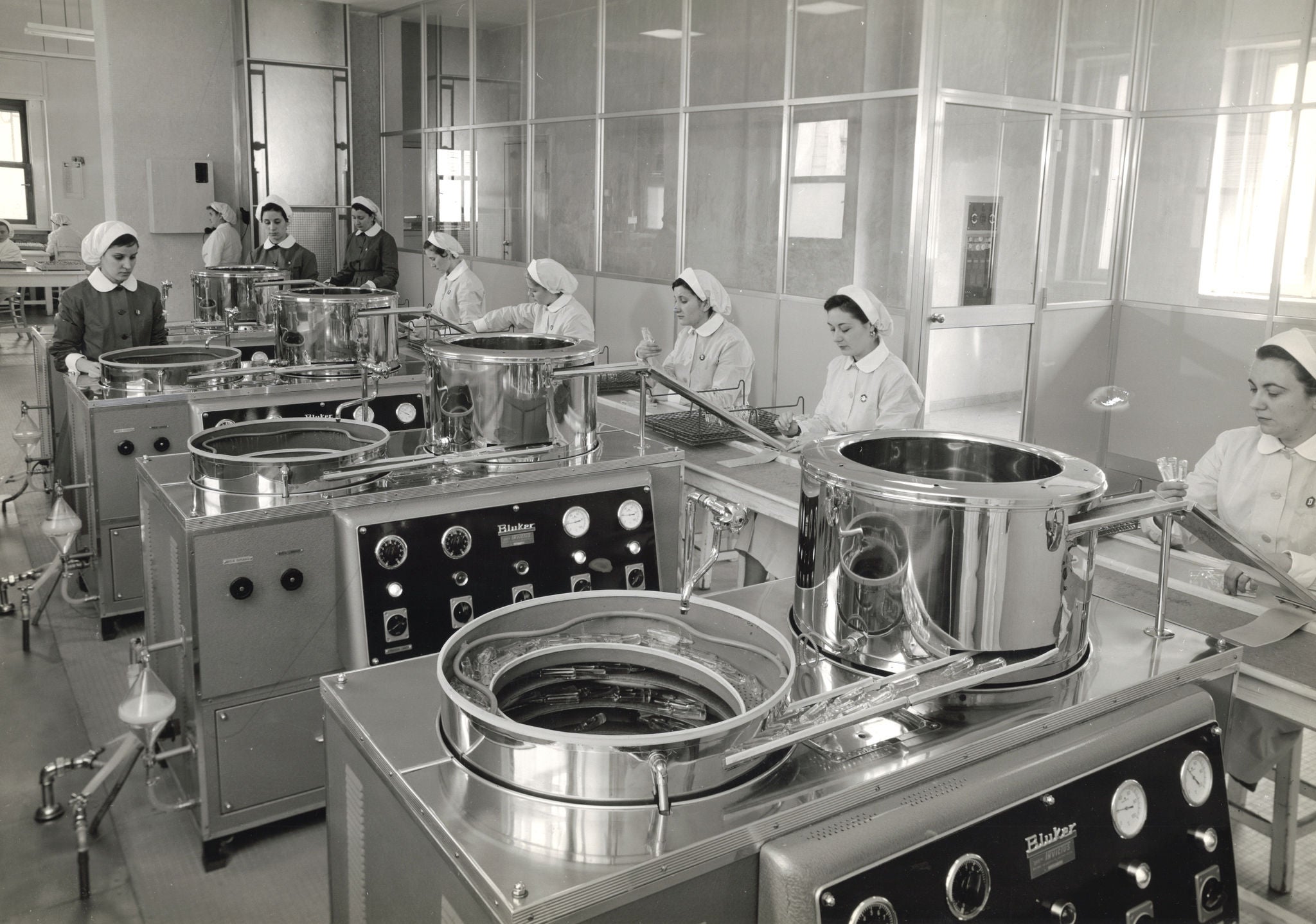
In Franco Dompé’s words, it was “one of the largest and most modern plants in the world for the production of medicines in vials”, equipped with specifically designed pioneering machinery. These innovations marked the transition to industrial-scale production.

Past and present

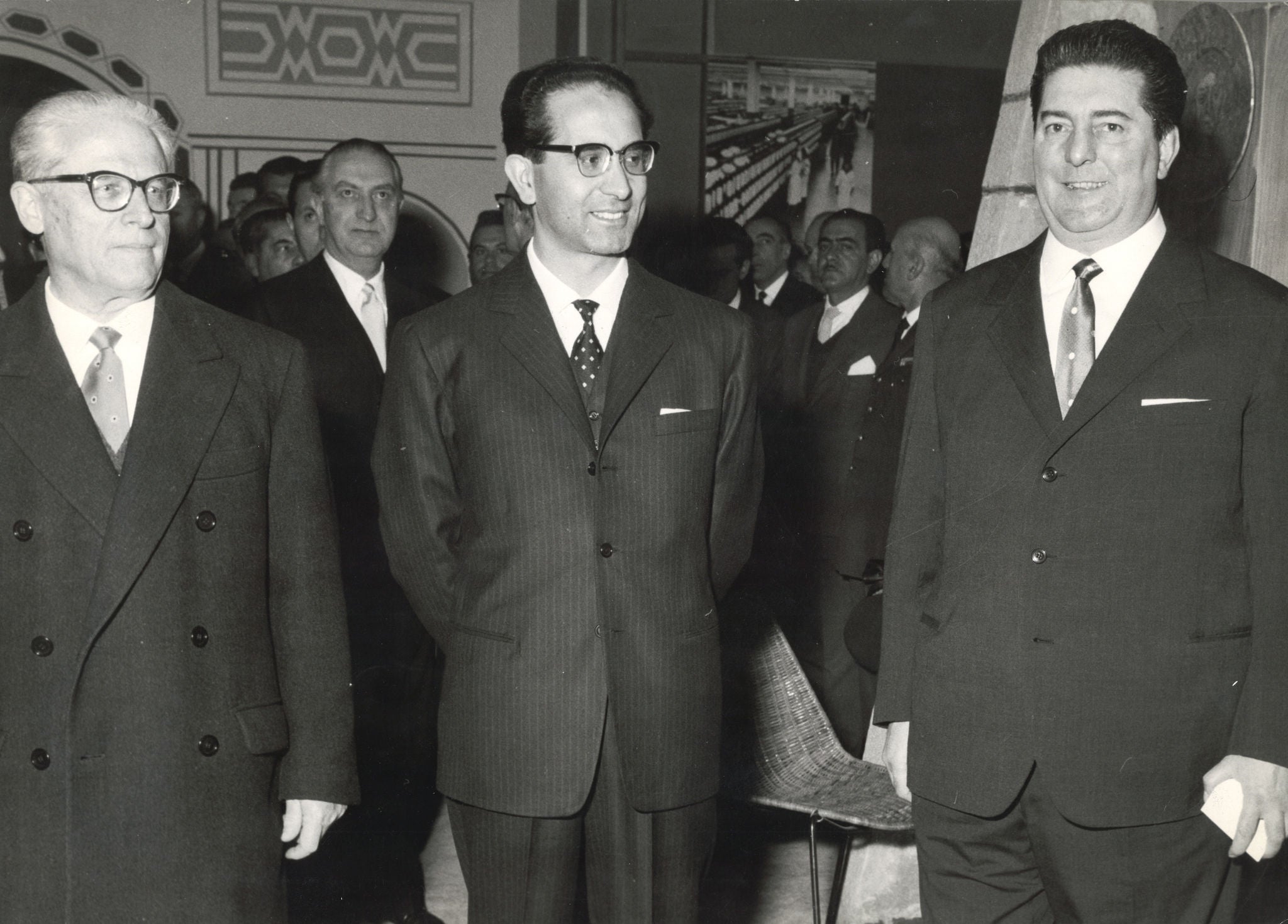
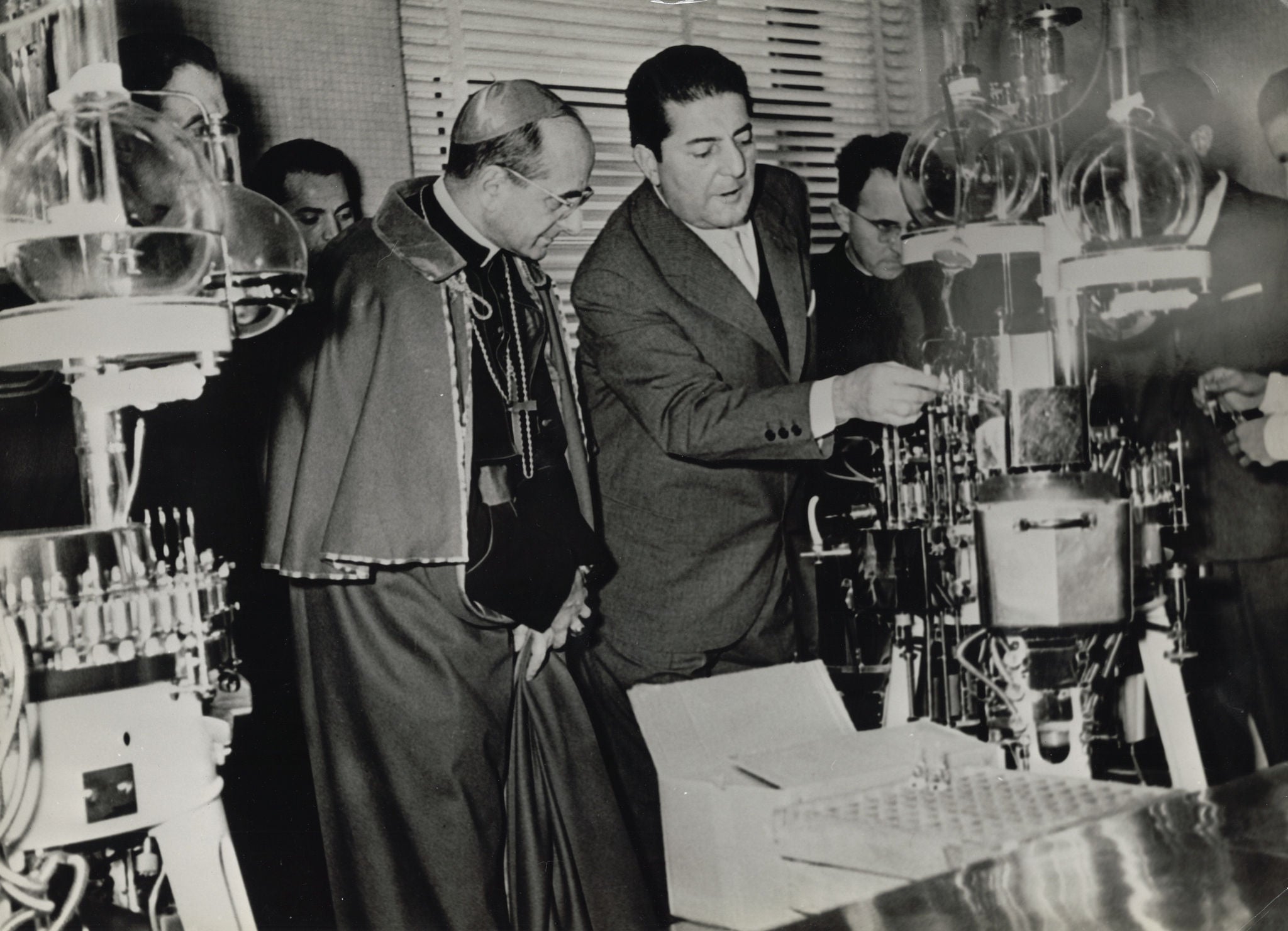
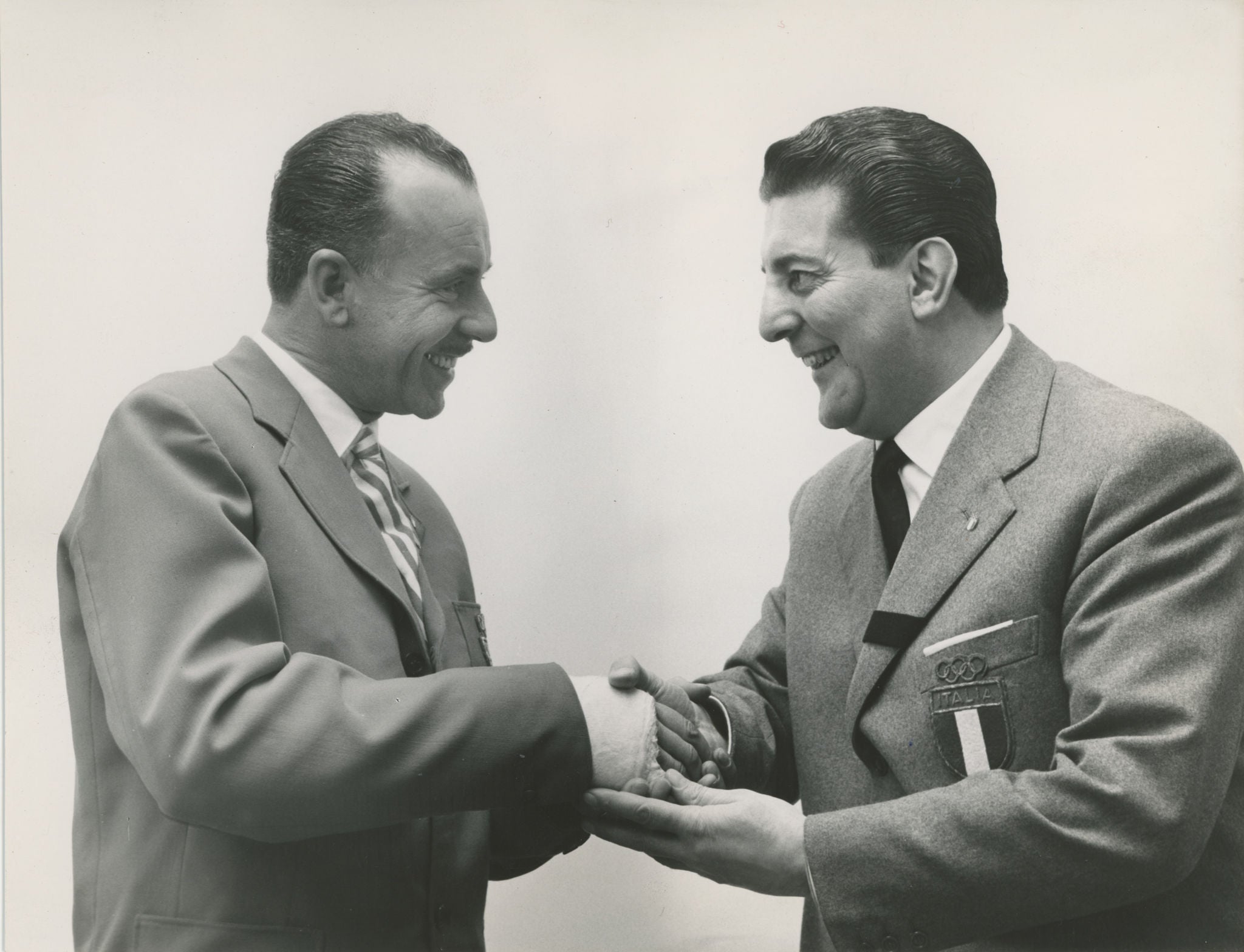
The site soon opened its doors to distinguished visitors: from the Honorable Giovanni Gronchi, who would become President of the Italian Republic in 1955, to Cardinal Giovanni Battista Montini, the future Pope Paul VI, from 1963 to 1978, and the bobsleigh champions of the 1956 Cortina Winter Olympics, gold medallists Giacomo Conti and Lamberto Dalla Costa.

The connection with Milan continues to this day: the historic building remains the nerve center of Dompé farmaceutici and, since 2020, it is also home to the Dompé Foundation. No longer a laboratory for producing medicines, but one for generating new knowledge and shared memory.